
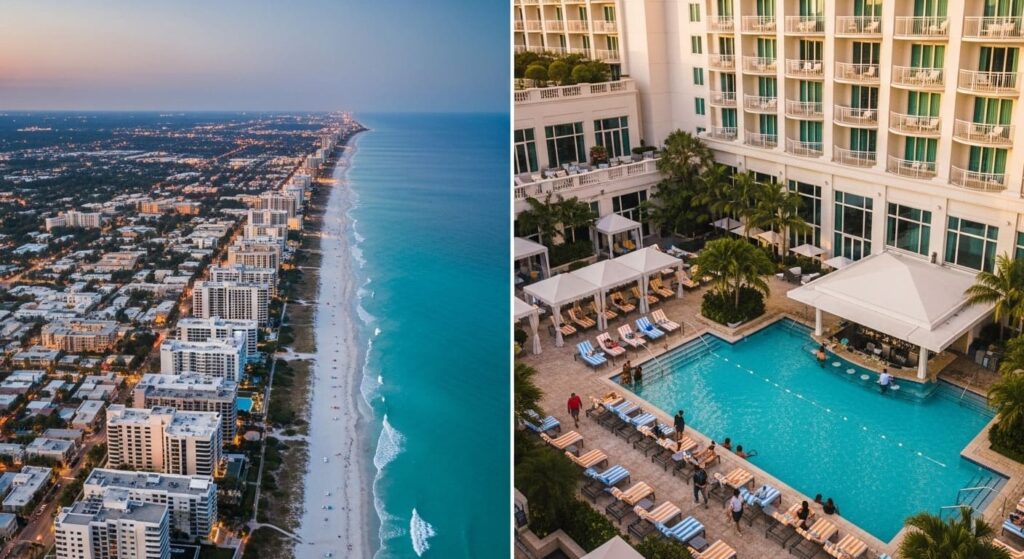
The difference between aerial photography and drone photography comes down to the aircraft, the working altitude, cost and creative control. For a Naples listing or hotel, the right choice depends on what the property actually needs to show. As professional photographers serving the Southwest Florida hospitality sector, we know that because hotel marketing depends heavily on visuals, choosing the right option directly affects guest interest and bookings.
At True Vision Photography, my team and I leverage both technologies to create comprehensive visual narratives. As an FAA Part 107-certified drone pilot, I have spent years refining the balance between cinematic aesthetics and the strict safety regulations required in our coastal environment. Understanding how each style functions helps hotel directors select the best strategy for branding, promotions, and increasing conversion rates.
What Is Aerial Photography in the Hotel Industry
Aerial photography involves capturing imagery from helicopters or fixed-wing aircraft. This perspective is used to emphasise a hotel’s “sense of place.”
These images provide a high-altitude vantage point that captures the hotel’s relationship to the Gulf of Mexico, the iconic Naples Pier, or protected preserves like Delnor-Wiggins Pass State Park. Because these shots offer a dramatic, sweeping scale, we recommend them for high-level destination branding, print media, and luxury property announcements. For those interested in the complexities of capturing waterfront properties, this high-altitude approach offers unparalleled scale. While visually stunning, their high logistical overhead reserves them for singular, high-impact campaigns rather than routine updates.
What Is Drone Photography for Hotels
Drone photography utilises high-resolution sensors and stabilised gimbals on unmanned aerial vehicles (UAVs) to capture dynamic, cinematic perspectives. As specialised aerial photographers, we use drones to bring a property’s “lifestyle” to life.
Unlike high-altitude aerial shots, drone imagery operates at lower heights, allowing us to highlight specific architectural details, amenity layouts, and the welcoming atmosphere of pools and courtyards. Because we can hover and maneuver with surgical precision, we capture the shots that drive direct bookings—such as the way the afternoon sun hits your patio or how your resort connects to the vibrant life on Fifth Avenue South. Before a session, review how to effectively prepare your property for a professional shoot. For a deeper look at how this elevates your brand, explore our professional commercial photography services.
Key Differences Between Aerial Photography and Drone Photography
The primary difference is creative control and agility. Aerial photography from a manned aircraft is often limited to wider, fixed flight paths. Drone photography, however, is dynamic. We can execute complex, slow-motion pans or low-altitude “fly-throughs” that give guests a virtual tour of your property.
Usage frequency is the second major differentiator. Aerial photography is a “milestone” investment. Conversely, drone photography is the “workhorse” of your digital presence. Because it is highly agile, we can capture seasonal updates—like new poolside décor or special event setups—ensuring your website and social media feeds always look fresh and relevant. Understanding how aerial imagery drives engagement and bookings is vital for any hotel director looking to maintain a competitive edge.
Equipment Used in Aerial vs Drone Photography
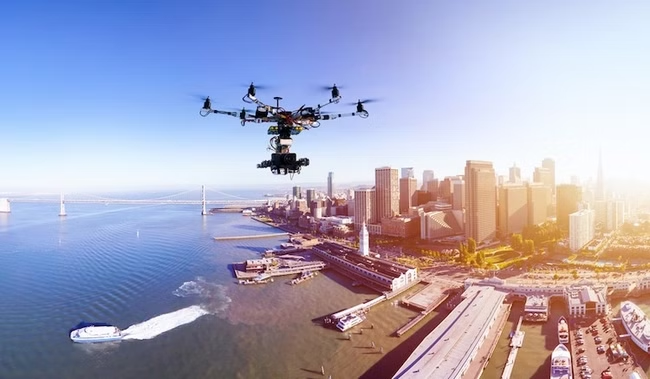
Traditional aerial photography relies on heavy, aircraft-mounted camera systems that are optimised for covering large geographical areas rapidly but require significant pilot and fuel logistics.
At True Vision Photography, we use state-of-the-art drone technology equipped with professional-grade sensors. This gear allows us to adjust camera settings mid-flight, ensuring the colour accuracy and exposure perfectly match your hotel’s brand guidelines. We also utilise our professional approach to interior and exterior photography to ensure that the lighting and atmosphere are perfected, capturing the unique charm of Southwest Florida properties in every frame. This level of technical control is what distinguishes our professional output from amateur “point-and-shoot” drone footage.
Cost Comparison for Hotels in Naples, FL
Cost is a critical consideration for hotel marketing budgets. Traditional aerial photography involves high overhead, including aircraft rental, specialised pilots, and complex scheduling. It remains an excellent choice for large resorts launching a new property or a massive annual campaign.
Drone photography is a far more efficient and cost-effective solution for consistent marketing. Because we eliminate the need for manned aviation, we can offer flexible packages that allow for multiple visits per year. This ensures that your photography portfolio scales with your marketing efforts without inflating your operational costs.
Image Quality and Creative Flexibility
While both methods produce professional-grade imagery, their creative purposes differ. Aerial photography is the master of prestige and location, providing the “big picture” that establishes your hotel as a landmark.
Drone photography is the master of experience and engagement. By flying at lower altitudes, we capture the textures, lighting, and “human” elements of the property. For a potential guest, the drone shot is more persuasive because it allows them to visualise themselves in the space, which is the most effective way to increase conversion and drive direct bookings.
Best Use Cases for Hotels and Resorts Near Naples Landmarks
Location is the primary draw for Naples tourism. Whether your hotel is tucked near The Ritz-Carlton Naples or centrally located near Tin City, your visuals must communicate your unique geography.
We utilise a hybrid approach to maximise your marketing impact:
- Aerial: Best for showing your hotel’s proximity to the Gulf of Mexico or regional transit corridors.
- Drone: Best for highlighting your hotel’s private amenities, walkability to Fifth Avenue South, or exclusive access to Naples Pier.
By combining these methods, we create a complete visual story that validates your premium position in the local market.
Safety, Permissions, and Local Regulations in Naples
Trust and safety are the foundations of our service. Aerial photography requires extensive airspace clearance, which can involve long wait times for authorisation.
As FAA Part 107 certified drone operators, our team manages all safety protocols internally. We handle the complex airspace coordination—essential in Naples due to our proximity to coastal zones and regulated tourist areas—ensuring your property is never exposed to liability. By working with a fully licensed and insured professional, you are protected from the risks associated with amateur drone operations, which often lack the necessary safety permits and insurance coverage. We also ensure all flights adhere to local Naples drone ordinances.
Which Option Is Better for Hotel Marketing
For the vast majority of your digital needs, drone photography is superior. Its flexibility, ability to capture intimate detail, and cost-efficiency make it the backbone of modern hospitality marketing.
Treat aerial photography as a supplement—a powerful tool for high-impact print ads or foundational brand identity projects. For your website galleries, booking engines, and ongoing social media engagement, the cinematic precision of drone photography provides the highest return on investment. To showcase amenities through motion, our cinematic real estate videography can further amplify this impact.
How Aerial and Drone Photography Impacts Hotel Bookings
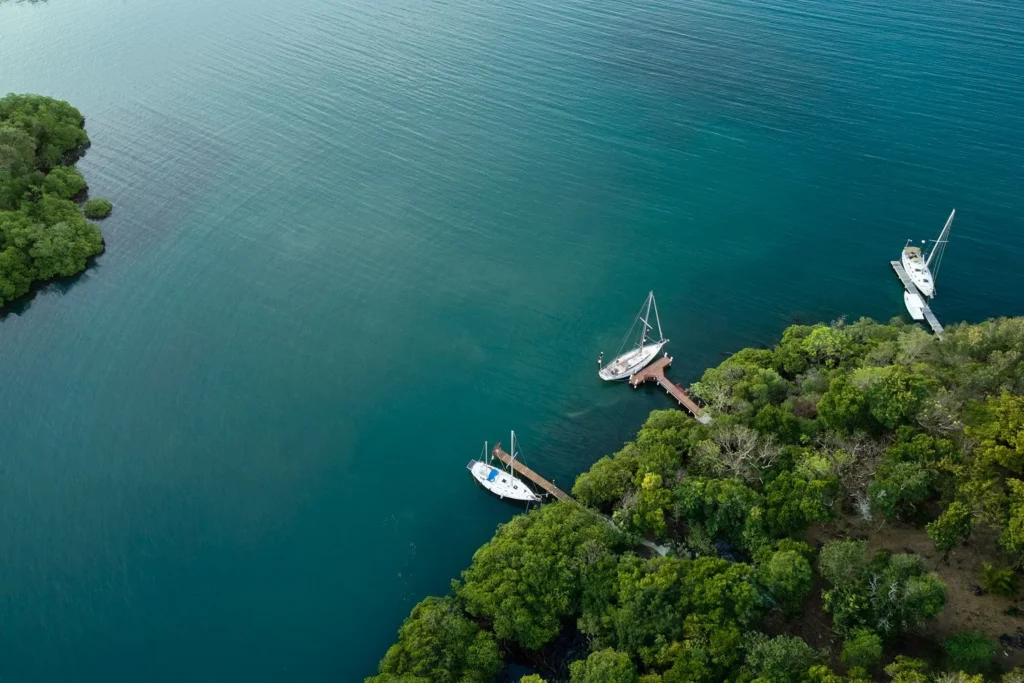
In a competitive market, visuals are your primary sales asset. Studies consistently show that professional, high-quality media increases the time a guest spends on your site.
By capturing your property from unique, professional angles, we move beyond “stale” architecture shots and provide an immersive experience. When guests can see the layout of your resort and its connection to the surrounding area, their confidence in booking increases. Our hospitality-focused workflow ensures that the final images aren’t just pretty—they are engineered to drive revenue.
Comparison Between Aerial Photography and Drone Photography for Hotels
| Feature | Aerial Photography | Drone Photography |
| Flight Height | Very High | Low to Medium |
| Cost | Higher (Logistics-heavy) | More Affordable |
| Creative Control | Limited (Fixed paths) | High (Dynamic motion) |
| Update Frequency | Occasional | Frequent/Seasonal |
| Best Use | Destination Branding | Property Marketing |
Which listings benefit from aerial photography?
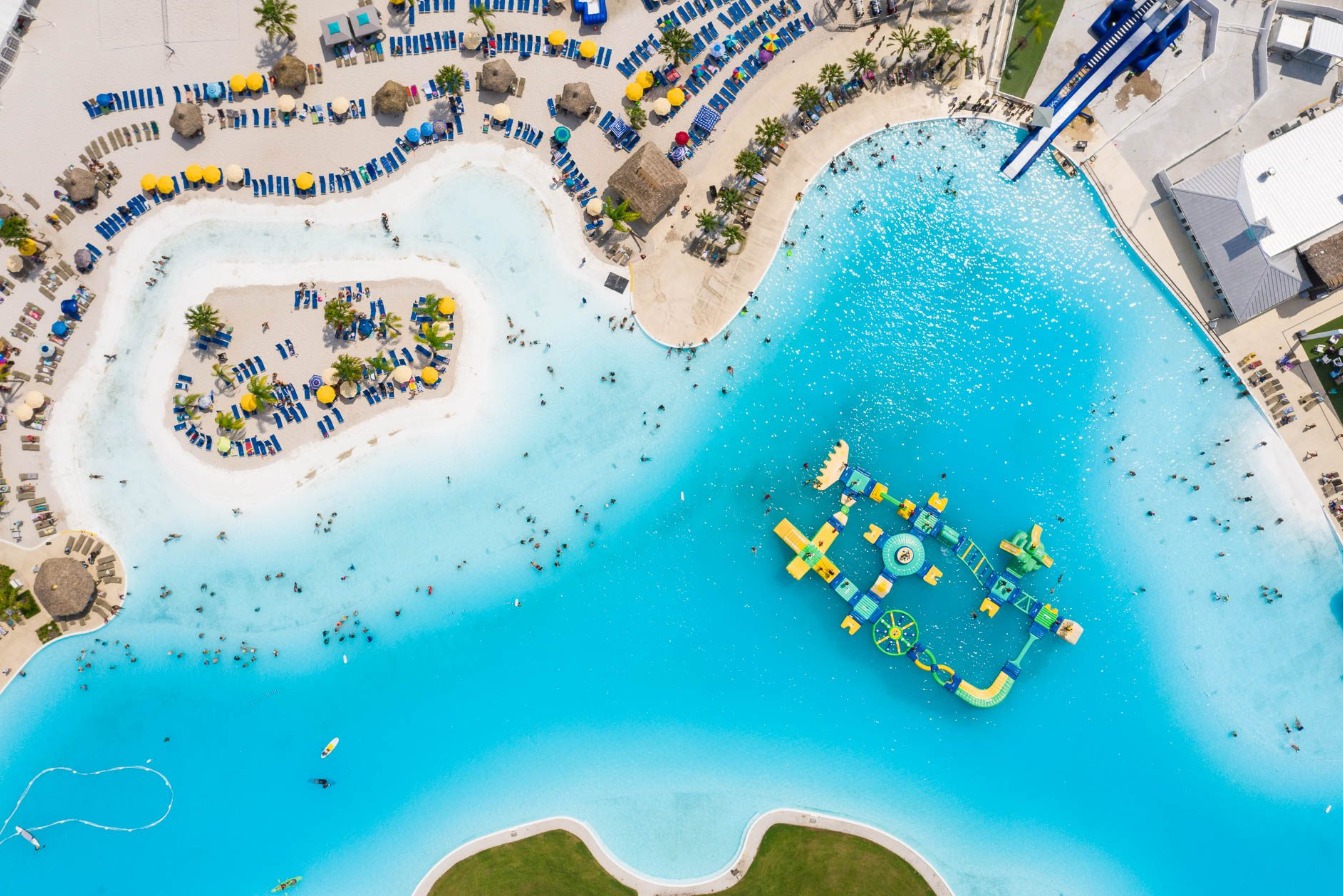
Use aerials when lot layout, waterfront and dock access, golf-course position, acreage, multiple structures, a pool and outdoor plan, commercial access or a meaningful nearby feature affects the decision. In Port Royal, Park Shore, Vanderbilt Beach and Marco Island, the relationship between the property and water can be essential. Keep the property large enough in frame to remain the subject.
Skip or limit aerials when they mainly reveal surrounding weaknesses, when an interior is the real selling story, or when dense neighbors make the home difficult to distinguish. Honest marketing does not require putting every possible angle in the gallery. It requires choosing the angles that help a buyer understand the offering accurately.
Does a listing need aerial stills or drone video?
Choose stills for fast comparison, printed materials, listing galleries and precise reference. Choose video when motion clarifies arrival, circulation, water access or the sequence between features. Many listings need only a concise still set. A larger waterfront estate, resort or development benefits from both when each format has a defined role.
Commercial properties continue with commercial real estate drone photography; land sellers can review aerial photography for land sales. Where ground, aerial and immersive media need to work together, add Zillow 3D, Matterport or floor-plan coverage only when it answers another buyer question.
What FAA rules apply to listing aerials?
The FAA treats work and business drone flights under Part 107. The operator must use a certificated remote pilot or direct supervision and comply with applicable registration, operating and airspace rules. The Part 107 operating limitations generally cap flight at 400 feet above ground, with a defined structure exception; controlled airspace may separately require FAA authorization.
Conclusion
Both aerial photography and drone photography offer distinct, high-value benefits for hotels in Naples, FL. Aerial photography defines your place on the map, while drone photography brings your property’s unique atmosphere to life.
For hotels seeking a partner that understands both the regulatory requirements and the aesthetic demands of luxury hospitality, bespoke commercial photography for the hospitality sector is the expert choice. We combine our FAA-certified expertise with a deep knowledge of the Naples market to deliver visuals that don’t just look good, they perform.
Conclusion
Both aerial photography and drone photography offer value for hotels in Naples, FL. Aerial photography focuses on location and scale. Drone photography delivers flexibility, detail, and modern appeal. Choosing the right option depends on budget, goals, and how often visuals are needed.
For hotels seeking professional visual solutions, True Vision Photography provides expert drone photography and aerial services tailored to hospitality marketing. Contact True Vision Photography to showcase your hotel with clarity, creativity, and confidence.
