
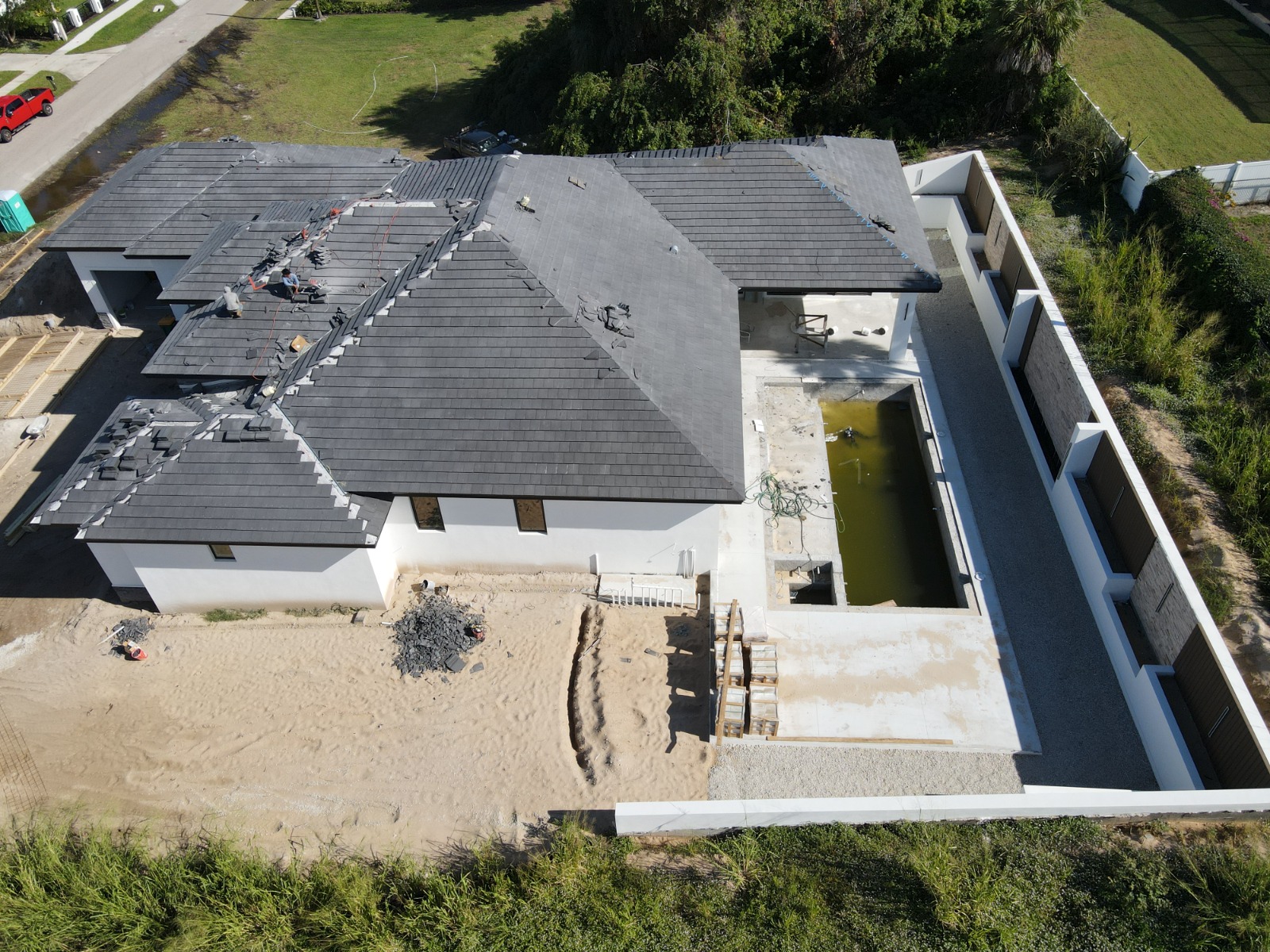
Most construction projects schedule drone photography weekly, biweekly, monthly, or at major milestones—the right interval depends on how fast visible work changes and when owners, lenders, or project teams need evidence. In Naples, Florida, fast exterior phases need tighter coverage than slow interior phases.
Start by reviewing TrueVision’s construction drone photography in Naples and our construction drone photography tips. This guide works with our construction-drone photographer hiring checklist, construction drone video guide, and Naples construction drone cost guide.
How often should a construction site be photographed by drone?
Use a cadence that is shorter than the period in which important exterior conditions can change. Weekly or biweekly capture fits active sitework, framing, roofing, exterior finishes, and other phases where one missed interval hides meaningful progress. Monthly capture can fit slower phases. Milestone-only visits work when the purpose is a concise record rather than continuous monitoring.
| Project condition | Useful cadence | What the record should show |
|---|---|---|
| Fast exterior change | Weekly or biweekly | Site logistics, installed work, material movement, access and visible milestones |
| Steady but slower progress | Monthly | Consistent whole-site comparisons and owner updates |
| Defined approvals or draws | Before each deadline | Dated context tied to the stakeholder decision |
| Long quiet phase | Milestone based | Baseline before the phase and confirmation when visible work resumes |
Which construction phases deserve the closest coverage?
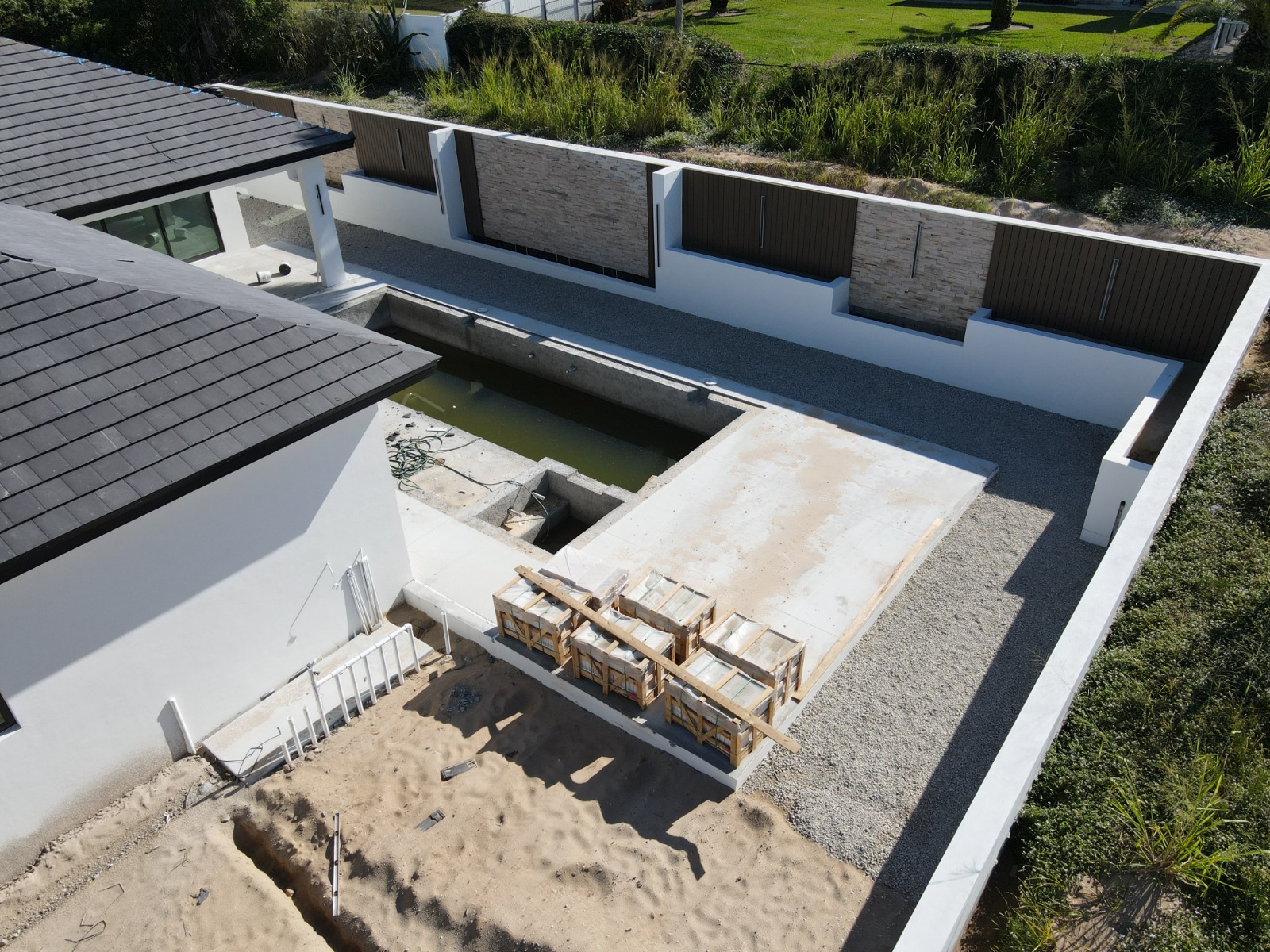
Capture a baseline before major site disturbance; then prioritize grading and drainage, underground work before it is concealed, foundations, vertical structure, roofing and envelope work, exterior hardscape, and closeout. The goal is not to photograph every workday. It is to avoid gaps around conditions that will soon change or disappear.
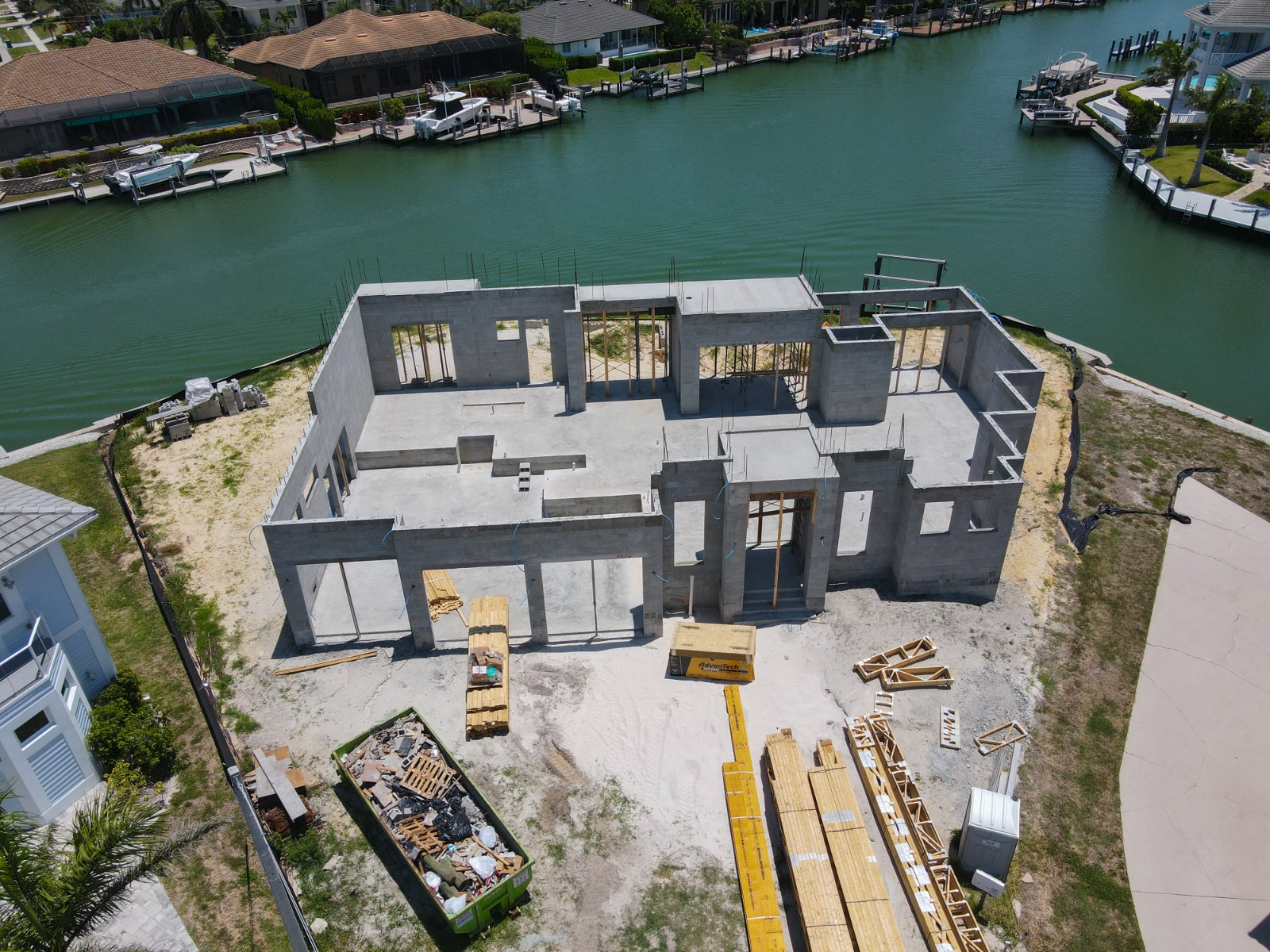
Southwest Florida scheduling needs flexibility. Summer storms, coastal wind, active crews, and airspace considerations can move a flight window. Sites near Naples-area airports may also require advance airspace planning under the FAA Part 107 authorization process. Builders working in the Corkscrew Road new-build corridor can also connect this service with our Estero photography coverage.
Who determines the best progress-photo schedule?
The superintendent should identify phases and safe access windows; the project manager should identify reporting dates; the owner, lender, or investor should identify decision deadlines; and the pilot should confirm weather, site conditions, and airspace feasibility. A useful schedule is agreed before the first recurring flight, then adjusted when the project sequence changes.
Why do repeatable viewpoints matter more than extra images?
Progress becomes readable when the pilot returns to consistent heights, headings, camera angles, and site coverage. A large folder of unrelated beauty shots is difficult to compare. A smaller set of repeated overview, oblique, access, and detail views creates a visual timeline a remote stakeholder can understand quickly.
How does cadence affect construction drone photography cost?
Cadence is one cost variable, along with site size, travel, airspace, requested photo and video deliverables, turnaround, and file organization. TrueVision publishes a confirmed $75 drone add-on for property packages, while recurring construction work is scoped to the actual project. See our current photography packages and construction drone photography pricing explanation instead of assuming an unconfirmed monthly rate.
For a real image sequence, review our Naples waterfront construction drone case study; for a GC-focused workflow, use the practical drone photography guide for contractors and builders.
Frequently asked questions
Is weekly drone photography necessary for every construction project?
No. Weekly capture is useful when exterior conditions change quickly or stakeholders need frequent updates. Monthly or milestone-based capture is more efficient during slower phases. Choose the interval from the construction sequence and reporting need, not from a universal rule.
When should construction progress drone photography begin?
Begin with a pre-construction or early-sitework baseline whenever possible. That first record gives later images context and can preserve conditions that grading, utilities, foundations, or material staging will change.
Should construction progress reports include photos and video?
Use photos for precise side-by-side comparison and archived reference. Add video when stakeholders need to understand movement, access, spatial relationships, or the experience of traveling around the site.
Who can legally fly a drone for paid construction photography?
The FAA says work or business flights under Part 107 require an FAA-certified remote pilot or direct supervision by one. Controlled-airspace operations may also require authorization before takeoff.
Regulatory and permitting sources were checked on August 4, 2026. Confirm project-specific requirements before each flight.
Set a construction capture schedule around the phases and decisions that matter. You can also review our Google Business Profile. Call 239-420-0789, request construction drone photography, or review our photography packages and pricing.
